March 26, 2026
Fuel consumption and delivery delays are the silent profit killers in UAE fleet operations – they build gradually through idling, suboptimal routes, urban congestion and varying driver habits rather than erupting suddenly. The core problem is invisibility.
- Manual control fails because too many variables interact in real time – route choices, driver behaviour under deadline pressure, vehicle condition (underinflated tyres, overloading) and idle time – and logbooks or location-only telematics cannot correlate them dynamically.
- Smart fleet management means measuring fuel consumption per trip, per vehicle and per driver, not just fleet-wide – revealing disparities that expose inefficient habits or maintenance needs.
- Idle time alerts can cut idling by 20–30%, directly lowering fuel burn, while route efficiency tools analyse historical and live data to avoid high-congestion zones.
- Delay reduction: real-time tracking enables on-the-fly rerouting around incidents (such as a sudden jam on Sheikh Zayed Road), live ETAs and delay alerts support proactive client communication, and better field-to-hub coordination allows load reassignment.
- Driver behaviour is where fuel costs and delays intersect – aggressive acceleration burns fuel and increases breakdown risk; harsh braking and idling amplify both cost and time loss.
- Measurement KPIs: fuel consumption per vehicle, trip or kilometre; cost per delivery or service visit; idle time trends; and on-time performance, which can move from 75% to 95% reliability.
Fuel Consumption and Delays: The Silent Profit Killers in Fleet Operations
In the fast-paced world of UAE fleet operations, fuel consumption and delivery delays often creep up unnoticed, chipping away at profitability without fanfare. These issues don’t erupt suddenly; they build over time through subtle inefficiencies like excessive idling during loading, suboptimal routes that lead straight into traffic snarls, congestion in bustling urban areas like Dubai or Abu Dhabi, and varying driver habits that amplify fuel burn. For fleets handling daily runs across industrial zones, highways, and city streets, these small leaks add up to significant financial drains.
What exacerbates the problem is the invisibility factor. Without tools that provide immediate visibility into fuel usage and operational hiccups, managers are left piecing together reports from fuel receipts, driver logs, and occasional GPS checks. By the time patterns emerge, the damage is done – higher fuel bills, frustrated customers due to late deliveries, and eroded margins that could have been preserved. In a market where fuel prices fluctuate and competition is fierce, ignoring these silent killers means leaving money on the table.
See where fuel is actually being wasted across your fleet: it’s often in the everyday details that go unchecked.
Why Fuel Consumption Is So Difficult to Control Manually
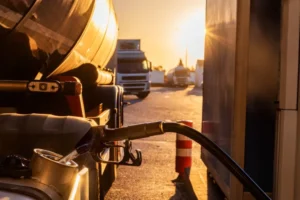
Controlling fuel consumption manually is like trying to plug a sieve with your fingers – too many holes, too few hands. Dozens of variables interplay in real time, making it nearly impossible to manage without advanced support. Route choices, for instance, can turn a straightforward delivery into a fuel-guzzling detour if congestion isn’t anticipated. Driver behavior under tight deadlines often leads to aggressive acceleration or speeding, spiking fuel use. Vehicle condition plays a role too; underinflated tires or overloaded trucks increase resistance and burn more fuel. Then there’s idle time at depots, stops, or even during brief halts in traffic, where engines run unnecessarily.
Traditional methods, such as manual logbooks or basic telematics that only show location, fall short because they can’t correlate these factors dynamically. Fleet managers end up relying on gut feelings or monthly summaries, which delay interventions. A route that seemed efficient last week might now be clogged due to construction, but without live data, adjustments happen too late. This reactive approach perpetuates cycles of inefficiency, where fuel consumption rises unchecked, and delays compound as vehicles get stuck in avoidable jams.
Understand what’s driving fuel usage beyond fuel prices: it’s the interconnected operational elements that manual systems simply can’t handle effectively.
What “Smart Fleet Management” Actually Means in Practice
Smart fleet management goes far beyond pinning dots on a digital map – it’s about integrating data streams to create a holistic view of operations. At its core, it connects fuel consumption metrics with vehicle movements, driver actions, and environmental factors into one actionable dashboard. This isn’t abstract tech; it’s practical intelligence that turns raw data into decisions.
In practice, a smart fleet management system allows you to measure fuel consumption not just fleet-wide but per trip, per vehicle, and even per driver, revealing disparities that highlight issues like inefficient habits or maintenance needs. It identifies routes that waste fuel due to excess mileage or frequent stops, and flags idle patterns that could be minimized with better scheduling. Unsafe driving – such as harsh braking or rapid acceleration – is detected and quantified, showing its direct impact on fuel burn. The real power lies in the immediacy: insights are available now, enabling quick tweaks like rerouting or coaching sessions, rather than retrospective fixes that come weeks after the fuel has been spent.
This evolution from passive monitoring to active management is what drives lasting reductions in fuel consumption and operational delays.
Explore how smart fleet data replaces guesswork: by providing the clarity needed to act decisively.
How Smart Fleet Management Directly Reduces Fuel Consumption
Reducing fuel consumption isn’t about hope or broad policies – it’s about visibility turning into targeted actions. Smart fleet management systems excel here by exposing inefficiencies in real time, allowing fleets to address them before they inflate costs.
Start with fuel monitoring: systems track usage patterns to spot anomalies, like sudden spikes that might indicate leaks, theft, or even unauthorized side trips. Idle time tracking is another game-changer; by alerting when engines run needlessly – say, during long waits at loading bays – managers can enforce protocols that cut idle time by up to 20-30%, directly lowering fuel burn. Route efficiency tools analyze historical and live data to suggest paths that minimize distance and avoid high-congestion zones, potentially shaving kilometers off each trip and reducing fuel consumption accordingly.
Then there’s driving behavior analysis: data on acceleration, braking, and speed helps pinpoint patterns that waste fuel, like aggressive starts that consume more energy. With this intel, fleets can implement coaching without guesswork, leading to smoother operations and measurable savings.
Instead of blanket rules, these systems enable precise interventions where fuel consumption is highest.
Identify fuel-saving opportunities hiding in daily operations: they’re often right in the data, waiting to be uncovered.
Cutting Delays with Real-Time Tracking and Route Intelligence
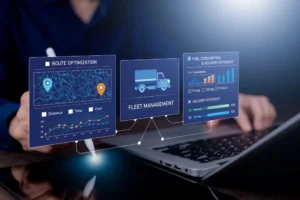
Delays in fleet operations stem from a lack of foresight and responsiveness – poor initial route planning leaves vehicles vulnerable to unexpected traffic, accidents, or roadworks, while absent live visibility means dispatch can’t intervene until it’s too late. This cascades into missed delivery slots, overtime costs, and strained customer relationships.
Smart fleet management counters this with dynamic tools that keep things on track. Real-time tracking provides continuous updates on vehicle positions, allowing for on-the-fly route adjustments based on current conditions – like diverting around a sudden jam on Sheikh Zayed Road. Live ETAs and delay alerts keep everyone informed, from drivers to clients, enabling proactive communication that prevents minor setbacks from becoming major issues. Enhanced coordination between field teams and operations hubs streamlines responses, such as reassigning loads or prioritizing urgent runs.
The payoff? Fewer delays, more predictable schedules, and reduced stress across the board, all while indirectly curbing fuel consumption by avoiding prolonged idling in traffic.
See how live tracking keeps deliveries on schedule: it’s the difference between reactive scrambling and smooth execution.
Driver Behaviour: Where Fuel Costs and Delays Intersect
Driver behavior is the linchpin where fuel consumption and delays often collide. Habits like aggressive acceleration not only burn extra fuel but also wear on vehicles, increasing breakdown risks that lead to delays. Speeding might shave minutes off a trip but heightens accident chances, while harsh braking and unnecessary idling amplify both costs and time losses.
Smart fleet management systems tackle this intersection head-on by providing objective data. They identify patterns – such as frequent hard stops or excessive speeds – and link them to fuel metrics, showing exactly how much extra diesel is wasted per incident. This enables fleets to encourage better practices through feedback loops, like scorecards or alerts, fostering smoother driving that conserves fuel and reduces wear. Accountability improves naturally, as drivers see the impact of their actions, without the need for constant oversight.
By using data to guide behavior changes, fleets achieve dual wins: lower fuel consumption and fewer delays from incidents or inefficiencies.
Turn driver insights into fuel and time savings: it’s about empowering better decisions on the road.
Fuel and Delay Reduction Across UAE Fleet Operations
Smart fleet management adapts seamlessly to diverse UAE sectors, delivering tailored reductions in fuel consumption and delays.
In logistics and transportation, optimized routing and idle reduction lower fuel use on high-volume runs between ports and warehouses. Construction and heavy equipment fleets benefit from monitoring high-fuel machinery, ensuring efficient operation on sites from Dubai’s skyscrapers to remote desert projects. For oil and gas, real-time oversight in rugged terrains cuts fuel waste in supply chains to rigs and refineries.
FMCG and distribution operations see faster deliveries with less fuel per route, maintaining cold chains without excess mileage. Government and utilities fleets enhance service reliability – think timely maintenance for power grids or water systems – while trimming operational waste.
Across these, the common thread is data-driven efficiency that fits local challenges like heat, traffic, and regulatory demands.
See how fleets similar to yours control fuel and delays: practical gains are within reach for any operation.
Measuring the Real Impact of Smart Fleet Management

True impact comes from metrics, not anecdotes. Smart fleet management systems make measurement straightforward, tracking key indicators to quantify improvements.
Fuel consumption is broken down per vehicle, trip, or kilometer, revealing trends and benchmarks for ongoing optimization. Cost per delivery or service visit ties fuel data to financials, showing direct savings. Idle time trends highlight reductions over time, while on-time performance metrics track delay improvements, perhaps from 75% to 95% reliability.
These KPIs provide undeniable proof of ROI, helping justify investments and guide further refinements.
Track fuel and time savings with real operational data: it’s the foundation for sustained efficiency.
Why UAE Fleets Rely on Smart Fleet Management from FMSi
In the UAE’s demanding environment, FMSi’s smart fleet management solutions stand out by addressing real-world needs. They integrate fuel intelligence for precise monitoring, route optimization to navigate urban and inter-emirate challenges, driver monitoring for safe and efficient habits, and real-time visibility for instant decision-making – all in one platform.
This unified approach avoids the pitfalls of fragmented tools, offering scalable support for growing fleets amid rising fuel costs and tight regulations.
Fuel Efficiency Is an Operational Decision
Fuel consumption and delays aren’t inevitable – they’re indicators of untapped improvements. By adopting smart fleet management, UAE fleets gain the control to minimize waste, enhance timelines, and build resilient operations.
Ready to take control of fuel consumption and delays?
Start optimising fuel, not just tracking it
Related Blogs
What Is Geofencing? How UAE Fleets Use Virtual Boundaries for Security, Compliance and Productivity
Geofencing is a virtual boundary drawn around a real-world location that automatically triggers an alert or action when a vehicle enters or exits it.

CAN Bus Data in Fleet Telematics: What Your Vehicles Are Telling You
Every modern commercial vehicle generates a constant stream of internal diagnostic data, whether or not anyone is reading it. Engine sensors, brake systems, and dozens of other electronic components are exchanging information every second the vehicle runs.
Vehicle Tracking System vs. Fleet Management System: What UAE Fleets Need
Search “vehicle tracking system” in the UAE and the results range from a AED 50/month dongle that pins a dot on a map to enterprise platforms quoting five figures a year.

Reckless Driving in the UAE: Fines, Black Points & How Fleets Prevent It
One conviction for reckless driving in the UAE comes with an AED 2,000 fine, 23 black points, and a 60-day vehicle impoundment. That’s not a typo, and it’s not the ceiling for speeding or a missed seatbelt – it’s a single violation, and it puts a license one point away from suspension.